Office of the Superintendent
August 2026
For the great majority of my 35-plus years in the field of education, teaching was considered more of an art than science. As part of their training, new teachers, regardless of grade level or specialty, would be expected to possess certain knowledge and foundational skillsets before embarking on their career in the classroom. However, as is so often the case, experience proves to be the best teacher.
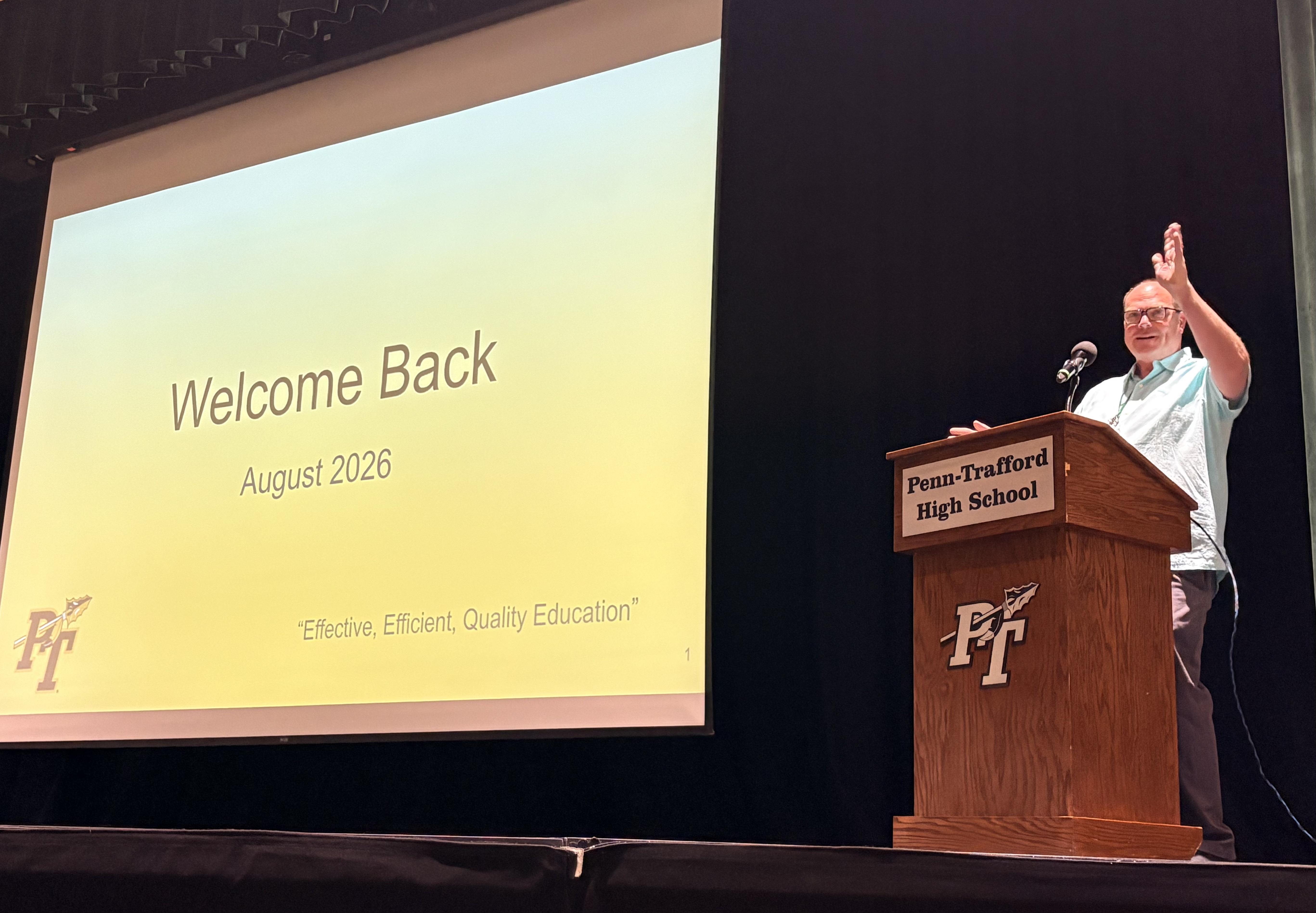 Traditionally, time accumulated in the classroom enabled educators to continuously refine their skills through experience and experimentation, professional development initiatives, and collaborative learning communities where ideas and best practices are shared amongst peers. As their portfolio of instructional skills continued to evolve and expand, they became more confident, assertive, and intuitive. Ultimately, as a result, teachers would master the unique and almost undefinable ability to make dynamic, durable connections between young minds and rigorous curricular content. Great teachers, like the ones we have always had here in the Penn-Trafford School District, were instinctive artisans of their craft. And that remains true to this day.
Yet, it can be argued that K-12 education today is more science-based than ever before – and therefore practitioners must embrace methodologies more deeply rooted in science and data as well. For example, the McGraw Hill Open Court Reading Series that we introduced in P-T elementary schools is explicitly based on Science of Reading principles that focus on how children learn to read with a strong emphasis on phonemic awareness, fluency, and comprehension.
To support this integration, Penn-Trafford successfully launched a new Multi-Tiered System of Supports (MTSS) at the beginning of the 2025-26 school year. MTSS provided a science-centered framework for data-driven, individualized English Language Arts (ELA) instruction and support ranging from universal “instruction for all” to targeted and intensive interventions based on identified needs. Our first year using MTSS to support a new ELA curriculum was admittedly challenging, even for our most seasoned educators, but ultimately successful. The experience also clearly illustrated how our educators were able to embrace evidence-based methodologies and leverage learning analytics while maintaining the “artistry” of teaching. And for their continuing efforts, I have great admiration and appreciation.
Many factors must come together for Penn-Trafford students to learn, but possibly the most fundamentally important is their presence in the classroom. Under the supervision of Assistant Superintendent Dr. Tiffany Nix, there will be a rigid district-wide focus in 2026-27 on improving school attendance. Through a grant from the Pennsylvania Commission on Crime and Delinquency (PCCD), Penn-Trafford was able to add a second social worker to serve as a school-to-home liaison to help enforce a stricter attendance policy in compliance with recent state mandates.
In a related measure, the district is also implementing Phase II of MTSS on the elementary and high school levels during the spring semester of the school year. Positive Behavior Intervention & Supports (PBIS) is an evidence-based, proactive framework designed to improve student behavior and foster a culture of safety and inclusiveness through the same tiered structure as MTSS. At its core, PBIS promotes establishing behavioral expectations, providing positive reinforcement, analyzing tracking data to understand and prevent negative behavioral patterns before they escalate, and a reliance on correctional methods rather than punitive measures. Penn-Trafford will implement building-level PBIS initiatives under the program theme “The Warrior Way” this year to better address the social/emotional needs of our students.
Declining financial support from the state coupled with continuously rising operational costs over the past several years required Penn-Trafford to raise its property tax rate by 3.5 mills in the 2026-27 school year budget. The increase also allows the district to maintain an adequate fund balance. Penn-Trafford continues to search for ways to supplement its budget through the generosity of organizations like the Penn-Trafford Community Education Foundation (PTCEF), which last year donated more than $120,000 toward educational initiatives in the district. The Penn-Trafford Building Warrior Campaign will resume in 2026-27 with each of our nine buildings raising funds to improve resources or facilities on their respective campuses. Technology resources in the district continue to evolve as students in kindergarten and grades 5-8 will receive new iPad computers. The upgraded units replace Chromebooks and offer greater overall functionality and ease of operation for students and teachers alike.
The theme of my message “Learners, Leaders & Achievers” is an expression of both gratitude and confidence in the Penn-Trafford School District. Our teachers, administrators, and Board of School Directors exemplify these qualities every day, and by doing so, we create a culture where students can become lifelong learners and school/community leaders. But most of all, it empowers the next generation to realize what they can achieve as they explore their limitless potential to become difference makers. Thank you for your continued trust and support.
Sincerely,
Dr. Matthew Harris
Superintendent of Schools